How to Secure a Rented Flat Without Drilling
You can boost the security of a rented flat without touching the walls. No-drill cameras, doorbells, portable locks and habits that keep your deposit safe.
Renters get security kit twice as hard: you cannot drill fixings, and you want everything back off the wall when you leave. The good news is that the most useful upgrades no longer need screws. Battery cameras, magnetic mounts, adhesive sensors and portable locks, plus a working smart lock where a landlord allows it, cover most of what a burglar alarm company would sell you, and none of it costs you your deposit.
Can you improve security in a rental?
Yes, and mostly without asking anyone. You cannot change the front door or fit a hard-wired alarm without permission, but you can add a layer of deterrence and monitoring that sits on top of what is already there. The goal for a renter is reversible security: devices that go up with adhesive, magnets or battery power and come down cleanly, leaving the flat exactly as you found it.
What no-drill security devices work?
A handful of devices do most of the work:
- A battery video doorbell on an adhesive or no-drill mount, so you can see and speak to whoever is at the door
- A camera with a magnetic base that sticks to a fridge, radiator or metal frame and keeps footage local
- A portable door lock or door-jammer that clamps onto the existing latch for extra security from the inside
- Smart plugs on timers to switch lamps on and off so the flat looks lived-in
- Contact or motion sensors with adhesive backing to alert your phone if a door or window opens
Where can you legally point a camera?
In a house this rarely comes up. In a flat it comes up immediately, because almost everything outside your front door belongs to everyone.
Filming inside your own flat is your business. The moment a camera or video doorbell captures images beyond your own property, though, data protection law is engaged and you take on responsibilities for the footage you are collecting - including handling requests from people you have recorded. Government guidance on domestic CCTV is the starting point, and it is worth reading before you mount anything rather than after a neighbour asks what your doorbell can see.
In practice, three things keep it simple in a block of flats. Angle the camera at your own door and the space directly in front of it, not down a shared corridor. Avoid framing another tenant's front door, which is where most disputes start. And check the building rules, because many leases and tenancy agreements restrict what can be fixed to communal walls regardless of what the law would allow.
A doorbell that sees your own threshold and a slice of the landing is usually uncontroversial. One that watches the whole corridor is a conversation with the managing agent waiting to happen.
Will adhesive mounts damage the walls?
This is the question that decides whether no-drill security is genuinely deposit-safe, and the honest answer is that it depends far more on the surface than on the adhesive.
Sound, fully cured emulsion on plaster usually releases cleanly if you remove the mount properly. Freshly painted walls, cheap matt emulsion, wallpaper and anything chalky are the risky surfaces: the adhesive holds better than the paint does, and it takes a patch with it. If you have a choice, mount to gloss-painted woodwork, uPVC, tile or glass rather than to a painted wall.
Removal technique matters more than people expect. Stretch-release strips are designed to be pulled slowly straight down, parallel to the wall, not levered outwards - pulling out is what lifts paint. Warming a stubborn pad with a hairdryer for a few seconds softens the adhesive and dramatically improves the odds.
Two habits protect the deposit. Photograph the surface before you stick anything to it, so a mark that was already there does not become yours. And take everything down a week before the final inspection rather than on the day, which leaves time to touch in a small patch if something does lift.
How do you make a flat look occupied?
An empty-looking home is the easiest target, and the fix costs very little. Put a lamp or two on smart plugs and schedule them to come on in the evening and off at bedtime, varying the timing rather than switching everything at once. A radio on a timer adds sound. Cancel or redirect deliveries when you are away so parcels do not pile up, and ask a neighbour to take in post. None of this touches the walls, and together it removes the tell-tale signs that no one is home.
Who else has a key to your flat?
The cheapest security review in renting is the one almost nobody does on move-in day: working out how many keys to your door exist and who holds them.
A flat that has been let several times may have keys with previous tenants, a letting agent, a maintenance contractor and the landlord. None of that is sinister, and all of it is worth knowing. Ask the agent directly how many sets are issued and who has them, and put the answer in writing.
If the answer is vague, a lock change is the fix, and it is a request landlords often agree to because it protects them too. The usual condition is that the work is done properly and the original lock, or a key to the new one, is handed back at the end of the tenancy. Changing a lock without permission and without giving the landlord access is what causes problems, not the change itself.
Worth remembering that a landlord retaining a key is normal and lawful. What is not acceptable is entering without proper notice, which is a separate issue from how many keys are in circulation.
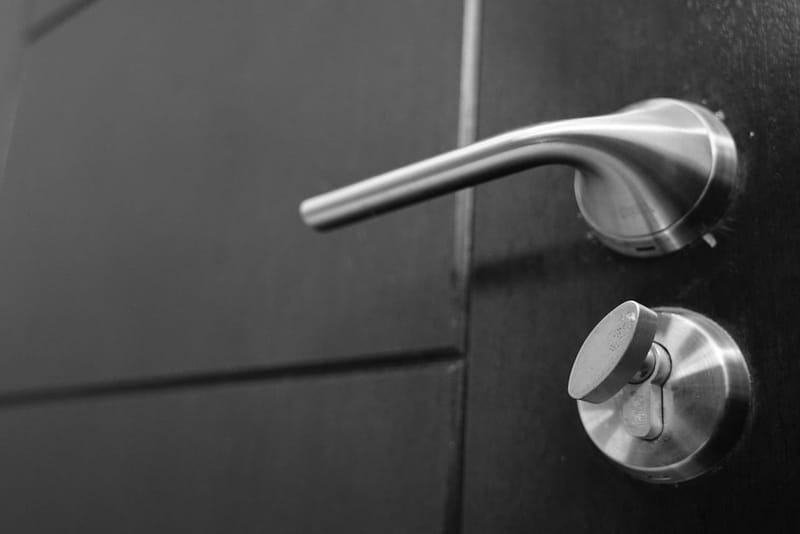
What about the front door lock?
The lock is the one area where you should involve your landlord. You cannot usually change the door lock without permission, but many landlords will agree to a lock upgrade if you ask, especially after a break-in or a lost key, and some allow a tenant-fit smart lock that leaves the original cylinder intact. In the meantime, a portable door lock or jammer adds inside-only security at night, and always use the existing deadlock and any door chain properly, since the best lock is worthless if it is not engaged.