Addalock Portable Door Lock
A tool-free portable door lock that clips into an existing strike plate to block entry from inside - ideal for renters who cannot drill or modify their doo
Strengths
- Requires no drilling, screws, or permanent modification
- Blocks the door from being opened even by someone with a key
- Pocket-sized and suitable for travel or moving between rentals
Watch outs
- Only works on inward-opening hinged doors - will not fit outward-opening or sliding doors
- Interior-only use: does not secure the door when you leave
- Not a replacement for a primary lock - provides supplementary privacy, not certified security
- Material Chrome-plated carbon steel
- Installation No tools required - clips into existing strike plate
- Door compatibility Inward-opening hinged doors only
- Minimum door gap 3 mm (between door and frame)
We may earn a commission if you buy through this link - it never changes the price you pay or our editorial verdict.
As an Amazon Associate I earn from qualifying purchases.
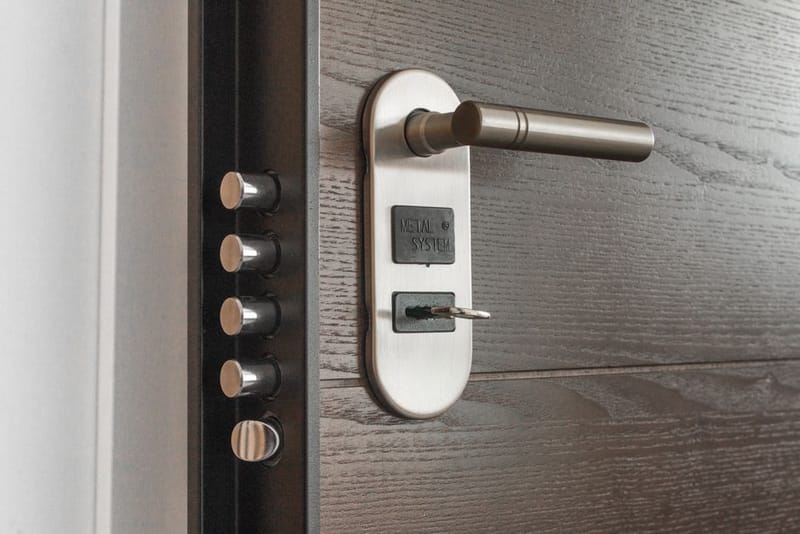
How does the Addalock work?
The Addalock has two parts: a chrome-plated steel claw and a red plastic stopper. The claw slots into the strike plate (the metal plate on the door frame that the latch closes into) while the door is open. You then close the door and slide the stopper down the claw until it sits tight against the inside face of the door.
What that does is brace the door itself rather than reinforce the latch, so retracting the latch achieves nothing. The manufacturer states the door cannot then be opened from the outside even by someone holding a key, a master key or a hotel key card. Fitting takes a few seconds and removal takes a couple, with no screws, no adhesive and nothing left behind on the door or frame.
Why does a portable door lock suit renters?
Changing the lock on a rented door is a modification, and it normally needs the landlord's agreement. A portable lock is not a modification at all. Nothing is drilled, screwed or glued, nothing is removed, and the device leaves with you at the end of the tenancy, so it raises no deposit question and travels to the next flat.
It is worth being clear about what it is for. Tenants in England have the right to "live in the property undisturbed", and GOV.UK guidance on renting rights and responsibilities states that a landlord "has to give you at least 24 hours' notice and visit at a reasonable time of day, unless it's an emergency and they need immediate access". A portable lock is about your own security while you are at home. It is not a way to refuse access that has been properly arranged.
The situations it fits best are the ones renting throws up most often: a bedroom door in a houseshare, a ground-floor flat, nights alone in a new building, and the stretch around viewings and contractor visits when more people than usual have been through the place. It sits alongside the reversible measures in our guide to securing a rented flat without drilling.
What doors does it fit?
Inward-opening hinged doors with a conventional strike plate, and nothing else. It will not work on an outward-opening door, a sliding or bi-fold door, or any door with no strike plate cavity for the claw to enter. That single requirement is the most common reason one does not work, so it is worth checking the door before buying rather than after.
There also has to be a small gap between the door and the frame at the strike plate, around 3 mm, for the claw to seat. Very tightly hung doors, and frames carrying large deadbolt hardware or an unusual strike arrangement, can leave too little room. Front doors on UK flats are frequently outward-opening for fire reasons, so check the flat door and the bedroom doors separately: the bedroom is often the one it fits.
What does the Addalock not do?
It cannot be set from outside the room. That is the defining limit and it follows from the design: the stopper is fitted on the inside face of the door. So it does nothing at all while you are out, which is when a flat is most likely to be burgled. It is a lock-and-stay device, not a substitute for locking up when you leave.
It is also supplementary rather than certified security. It does not carry a British Standard lock rating, and it is not a replacement for the primary lock or deadlock on the door. Treat it as something that buys privacy and delay while you are inside, and keep using the existing deadlock and any door chain properly.
What should you know about fire safety?
Anything that blocks a door sits on an escape route, so it deserves a moment's thought rather than none. The device is designed to come off in a couple of seconds, but that is only true if you have done it before. Fitting and removing it a few times in daylight, at home, is what makes it quick in the dark.
Two habits follow. Remove it before you sleep somewhere unfamiliar if you are not confident with it yet, and do not fit one to a door that forms part of somebody else's escape route, such as a shared internal door in a houseshare, without agreeing it with the people it affects. On a bedroom door that only you are behind, the trade-off is straightforward.
Can someone with a key open a door with an Addalock fitted?
Does the Addalock work on outward-opening doors?
Do you need the landlord's permission to use a portable door lock?
Does the Addalock secure the flat when you are out?
Will a portable door lock damage a rented door?
- Material
- Chrome-plated carbon steel
- Installation
- No tools required - clips into existing strike plate
- Door compatibility
- Inward-opening hinged doors only
- Minimum door gap
- 3 mm (between door and frame)
- Use case
- Lock-and-stay (interior use only, cannot be set from outside)
- Portability
- Pocket-sized, suitable for travel